Bachelor’s Buttons
Name of plant:
Bachelor’s Buttons (Cornflower)
Traditional Lore
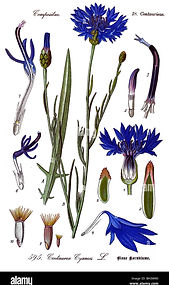
Bachelor's Buttons, also known as Cornflower, once flourished among the grain fields of Europe, where its vivid blue blossoms stood out against golden waves of wheat and barley. For centuries, the flower was admired not only for its beauty but also for its place in rural traditions, seasonal festivals, and cottage gardens. Its presence in cultivated fields made it a familiar symbol of summer, harvest, and the enduring bond between people and the land they farmed. Though now less common in modern agriculture, cornflower remains an emblem of resilience, simplicity, and the wild beauty that once accompanied the harvest.
Family:
Asteraceae (daisy family)
Genus and species:
Centaurea cyanus
Other names:
Cornflower, Bluebottle, Hurt Sickle, Blue Cap, Cyani flos (pharmacological Latin)
Brief introduction:
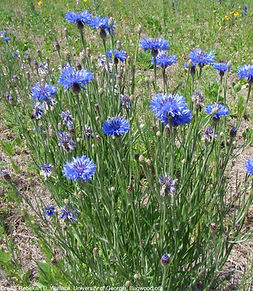
Bachelor’s buttons is a striking annual wildflower native to Europe and widely naturalized elsewhere. Known for its vivid blue composite flowers, it was once a common “weed of the grain fields,” thriving among cereals before modern herbicides reduced its prevalence. Today it is valued both ornamentally and as a gentle medicinal herb, especially in eye and skin preparations.
Traditional uses:
Traditionally used as a mild anti-inflammatory and soothing herb, particularly for irritated eyes. Infusions of the petals were used in washes for conjunctivitis and eye strain. It was also used for mild digestive support and as a gentle astringent in skin care.
Historical use:
In European folk medicine, cornflower was included in “eye water” preparations alongside chamomile and eyebright. In medieval and early modern herbal traditions, it was considered cooling and drying, often used to “clear heat and inflammation of the eyes.” It also held symbolic value in rural Europe as a flower of remembrance and fidelity.
Parts used and method of use:
Primarily the dried florets (petals), sometimes whole flower heads.
-
Infusion (tea)
-
Eyewash (filtered, sterile preparation)
-
Compresses/poultices
-
Occasionally tincture
Use in healing (modern herbal practice):
Used mainly as a gentle anti-inflammatory and soothing agent. Modern herbalists use it for:
-
Eye irritation (mild conjunctivitis, fatigue—external only)
-
Skin inflammation (compresses, creams)
-
Mild diuretic support in blends
-
Cosmetic preparations for sensitive skin
Pharmacology and biochemistry:
Contains:
-
Anthocyanins (notably cyanidin derivatives, responsible for blue pigment)
-
Flavonoids (anti-inflammatory and antioxidant activity)
-
Polyacetylenes (trace bioactive compounds)
-
Mucilage (soothing demulcent effect in mild amounts)
Actions are considered mild: antioxidant, anti-inflammatory, astringent, and vasoprotective (theoretical based on flavonoid content).
Common dosage:
-
Infusion: 1–2 teaspoons dried petals per cup of hot water, up to 2–3 times daily
-
Tincture (1:5, 40% alcohol): 2–4 mL up to 3 times daily
-
External wash: dilute sterile infusion applied as needed
(Internal use is generally mild and often combined with other herbs)
Safety factors (including side effects):
Generally considered very safe.
-
Possible allergic reaction in individuals sensitive to Asteraceae family (ragweed-type allergies)
-
Rare skin irritation
-
Avoid contaminated wild-harvested material (pesticide exposure risk)
First aid / adverse reaction response:
-
Mild rash or irritation: discontinue use, rinse area with cool water
-
Eye irritation after wash: stop use immediately and flush with sterile saline
-
Allergic symptoms (itching, swelling): discontinue and seek medical advice if persistent
-
Severe reaction is extremely rare but warrants emergency care if respiratory symptoms occur
Drug interactions:
No well-documented clinically significant interactions.
Theoretically caution with:
-
Strong diuretics (additive effect possible, though mild)
-
Anticoagulants (very weak theoretical flavonoid activity; not clinically established)
Horticultural requirements:
-
USDA / Canadian zone: 2–11 (hardy annual; tolerates cold sowing)
-
Soil pH: 6.0–7.5
-
Light requirements: Full sun (best flowering), tolerates light partial shade
-
Moisture: Moderate; drought-tolerant once established, dislikes waterlogged soil
-
Other notes (growth habit, harvest timing, etc.):
Fast-growing annual (30–90 cm tall). Direct sow in early spring or autumn. Deadhead for prolonged blooming. Harvest flowers when fully open, preferably on dry mornings; petals can be dried for medicinal use.
Sampling of clinical reports / studies:
-
Limited modern clinical trials exist.
-
In vitro studies show antioxidant activity linked to anthocyanin content.
-
Some antimicrobial activity observed in laboratory extracts against common skin and oral bacteria.
-
Cosmetic research supports mild anti-inflammatory and soothing effects in topical formulations.
-
Most medicinal use is supported by traditional herbal practice rather than large-scale clinical validation.
-
-
-
-
Educational Use Only: The information presented on this page is provided for educational, historical, and informational purposes only. ArdNemeton na Tuatha and Bhùth Draoi do not provide medical advice. Always consult your physician and pharmacist before using any herb, mushroom, supplement, or botanical product for medicinal purposes. Traditional uses described herein do not constitute medical claims.